
Page: Personal Injury Law Firm Blog
Damage to any part of the spinal cord or nerves at the end of the spinal canal (cauda equina) can cause permanent changes in strength, sensation, and other bodily functions.
Your life might seem affected in every way if you’ve recently injured your spinal cord. Your injury may affect you mentally, emotionally, and socially.
Researchers are optimistic that advances in research will eventually allow spinal cord injuries to be repaired. There are ongoing research studies around the world. Meanwhile, spinal cord injury patients can live productive, independent lives with the aid of treatment and rehabilitation.
The Basics of Spinal Cord Injury
When vertebrae of the spine become fractured or twisted and bent unnaturally, spinal cord injuries occur. Vertebral fractures cause spinal cord injuries due to the sensitivity of the spinal cord to damage. One fragment of vertebrae is all it takes to puncture the spinal cord.
Common Symptoms
When you suffer a spinal cord injury, your ability to control your limbs depends on two factors: where the injury occurred on your spinal cord and how severe it was.
The neurological level of an injury is the lowest portion of your spinal cord that is not damaged after it has been injured. Injuries are classified as complete or incomplete based on their severity:
- In a complete spinal cord injury, all sensation (sensory function) and motor function (motor function) are lost.
- It is called incomplete injury if you are able to move or sense below the injured area. Incomplete injuries can vary in severity.
Additionally, paralysis from a spinal cord injury can be referred to as:
- (Tetraplegia) This is also known as quadriplegia, which means all your arms, hands, trunk, legs, and pelvic organs are affected by the spinal cord injury.
- (Paraplegia) This condition causes paralysis of the trunk, legs, or pelvic organs.
It is possible for minor spinal cord injuries to go undetected at first. In order to determine when medical help is needed, it is vital to recognize the early signs of spinal cord injury. Alternatively, the damage could worsen through inflammation or by moving in the wrong direction.
The signs of a complete spinal cord injury are far more severe than those of an incomplete spinal cord injury. When the spinal cord has been completely severed, it is known as a complete spinal cord injury. In contrast, an incomplete spinal cord injury involves only partial damage to the spinal cord.
Signs and symptoms of spinal cord injuries include:
- Complete loss of movement
- Sensation loss or alteration, including heat, cold, and touch
- Loss of control over the bowels and bladders
- Spasms or reflex activities that are exaggerated
- Sexual function, sexual sensitivity, and fertility changes
- A stinging or painful sensation caused by damaged nerve fibers in your spinal cord
- Coughing, having difficulty breathing, or coughing up secretions
Most spinal cord injuries resulting in complete paralysis result in complete amputation of the spinal cord. Damage to the damaged site causes loss of movement, sensation, and other bodily functions. Damage from the waist up tends to cause:
- Weakness in the arms or legs
- Loss of control over the bowels or bladder
- Feelings of numbness or tingling
- Fingers or toes are partially immobile
- Problems with coordination
- Difficulties breathing
- Loss of movement
- Inability to walk
There are often tingling sensations, numbness spreading throughout the body, back or neck pain, and muscle spasms associated with spinal cord injuries. If someone experiences severe back pain after an accident, it could be a sign of a spinal injury. Spinal cord injuries can be caused by almost any significant impact on the spine.
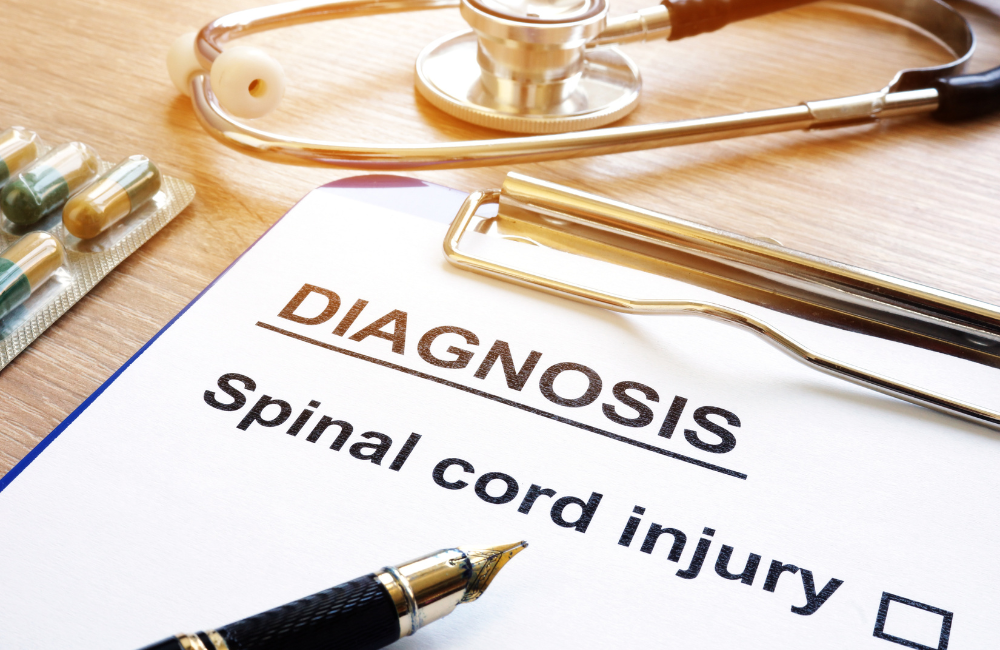
When should you see a doctor?
A spinal injury must be evaluated immediately by a medical professional after significant trauma to the head or neck. Until proven otherwise, it is safest to assume trauma victims have spinal injuries for the following reasons:
- It’s not always obvious when someone has suffered a severe spinal injury. If it is not detected, more severe damage may result.
- Paralysis or numbness can occur immediately or gradually.
- It is crucial to consider the time interval between injury and treatment when determining the extent and severity of complications.
In the event that you suspect someone has a back or neck injury:
- The injured person shouldn’t be moved – permanent paralysis and other serious complications may result.
- 911 or your local emergency medical assistance number should be called.
- Ensure that the person remains still
- As soon as emergency care arrives, place heavy towels around both sides of the neck or hold the head and neck to prevent them from moving.
- Make the person comfortable, stop bleeding, and provide basic first aid without moving the head or neck.
Without proper treatment, spinal cord injuries can lead to lifelong disabilities. In the absence of emergency care, spinal cord injuries can be life-threatening. If you recognize the signs of a spinal cord injury early, you can reduce the chances of the damage worsening. In addition, it is possible to receive compensation if you suffered a spinal cord injury due to someone else’s negligence. Consult a Spinal cord injury lawyer in Palm Beach County to learn more.
There are often tingling sensations, numbness spreading throughout the body, back or neck pain, and muscle spasms associated with spinal cord injuries. For example, if someone experiences severe back pain after an accident, it could signify a spinal injury. A spinal cord injury can occur as a result of almost any trauma to the spine.
The long-term effects of spinal cord injuries
Long-term effects may include loss of sensation and movement below the damaged area. There are also complications associated with spinal cord injuries:
- The inability to control one’s bladder and bowels permanently
- An inability to breathe without the aid of an assistive device
- The inability to speak
- Having chronic pain in your legs, back, or other parts of your body
- The development of pressure ulcers and bedsores
- Autonomic dysreflexia that can be life-threatening
- Sexual dysfunction
- Muscle reflexes
- A problem with blood circulation
Stress, anxiety, and depression can also result from so many life changes at once. Some of these battles can last a lifetime and can drastically alter a person’s outlook and enjoyment of life. One of the worst things about spinal cord injuries is their lifelong complications. Treatment does not always improve spinal cord injuries.
Can you sue for a Spinal Cord Injury in Palm Beach County?
If another person’s negligence caused your spinal cord injury, you might be able to sue. Typically, this involves filing a personal injury claim against the negligent party. Accidents that can result in personal injury lawsuits include:
- Auto accidents
- Medical malpractice
- Slip and fall
- Assault
- Defective products
Your injury must be proven to be the result of negligence, damages, and causation in order to receive compensation. Medical records and pay stubs can prove damages such as lost wages and medical bills. Witness testimony may be required for other damages, such as pain and suffering.
Depending on the reason for your lawsuit, proving negligence and causation can be challenging. Documents, pictures, and digital traces should be collected as much as possible. Find out what other steps you can take by contacting a Palm Beach County spinal cord injury lawyer. A lawyer can help you receive the proper compensation.
Spinal Cord Injury Lawyer in Palm Beach County
The process of filing a personal injury claim is not always straightforward, and it can be stressful if your claim is denied. For a free consultation with a Palm Beach County personal injury attorney, contact the Bodden and Bennett Law Group online or call (561) 806-5229 today. Our legal team might be able to assist you in obtaining compensation for lost wages, pain and suffering, and medical expenses. We are located in Boynton Beach, Florida.
Who is liable for a food delivery driver accident in South Florida?
Accidents may result when delivery drivers are pressed for time to deliver food and other goods to consumers. The issue of who can be sued for personal injuries when a delivery driver causes a car accident arises.
It’s crucial to recognize who is in charge of an accident with a food delivery driver for DoorDash, Grubhub, Instacart, Postmates, Shipt, Uber Eats, and similar companies that are competing for those five-star ratings.
Food delivery drivers are more likely to crash than other drivers.
Food delivery services are growing increasingly popular as people see the advantages of getting groceries or meals delivered directly to their door. Due to this, more people are now providing food, frequently in bad weather or during rush hour.
Although delivering food is a challenging job, everyone is at risk from a delivery driver’s accident.
Who is to blame if a food delivery driver accident in South Florida and I collide?
Drivers in Florida who are involved in an accident must submit a claim to their insurance company.
In Florida, most food delivery drivers have personal auto insurance. However, if the at-fault motorist is actively in the process of making a meal delivery, the at-fault driver’s auto insurance may refuse compensation as the insurance company may qualify this as a form of commercial driving. In these instances, the commercial insurance policy of the food delivery company will likely apply.
Is the food app delivery driver at fault for distracted driving accidents in Florida?
You will likely be able to sue the firm that employs the driver if it turns out that the restaurant or other establishment is responsible. In most cases, when a person acts carelessly while on the job, the employer is held accountable. Vicarious liability is the phrase used in legal jargon to describe this.
You and your auto accident lawyer must thoroughly review the company’s insurance plans. While some large franchises and eateries have comprehensive insurance, several food delivery firms offer just limited insurance or none for their drivers.
Furthermore, a lot of delivery drivers work as independent contractors. You could find it more difficult to file claims in these circumstances. Although there are a few exceptions, a firm is typically not liable for an independent contractor’s negligence.
Some app delivery driver services, like Uber, Lyft, and DoorDash, require their drivers to hold sizable commercial liability insurance premiums. But whether the driver was on an active assignment can affect that coverage.
In other circumstances, the app only provides drivers with an “excess” auto insurance policy, which means liability coverage only becomes effective after the driver’s motor insurance has run out.
The app’s coverage won’t protect the driver if they don’t have insurance. Drivers depend on liability insurance because some companies don’t offer any insurance coverage.
Drivers’ Insurance Coverage for Food Delivery
Most restaurants that deliver food designate their drivers as independent contractors rather than employees. This indicates that certain businesses might be legally exempt from responsibility for a driver’s behavior.
However, if a food delivery driver causes a collision, their motor insurance may not be sufficient to pay for the victim’s damages. Some meal delivery service providers might offer insurance liability in these circumstances.
Aspects contributing to food delivery accidents
Drivers who deliver food might be slightly more inattentive than other drivers and could be more likely to be involved in collisions. Here are a few elements that affect food delivery mishaps:
Not enough experience
Drivers that deliver food are typically younger. Younger drivers frequently have less experience behind the wheel than older drivers, which makes them more likely to commit errors like speeding and distracted driving.
Strong Pressure
Drivers of food delivery services are under tremendous pressure to deliver food efficiently and precisely. If their drivers receive negative client reviews, certain meal delivery firms will discipline them.
Therefore, drivers often travel as quickly as possible to increase their tips and receive higher client evaluations. This might encourage speeding and lead to unsafe driving.
More time spent in the car
Additionally, compared to the ordinary person, delivery drivers spend more time driving. Therefore, the more time you spend on the road, the greater the chance you’ll be in an accident.
Delivery drivers frequently travel through unknown neighborhoods and on unfamiliar routes. They may travel while it is dark, foggy, or raining. Their risk of an accident rises as a result of everything.
Because they might use their phones and get distracted while driving, most delivery drivers also have extra connectivity.
Many drivers utilize navigation tools to locate pickup and delivery locations, while others stay in contact with the customer the entire time they drive.
If a food delivery driver’s accident in South Florida resulted in your harm, is compensation due to you?
Your damages should be covered if the motorist has a business auto policy. This presupposes that the driver’s carelessness was what injured you. It also implies that the driver is covered by liability insurance for physical harm.
How might you get hurt in a food delivery driver accident in South Florida?
You could get hurt in a lot of different ways, but the following are the most typical ones:
- Contusions and bruises
- Whiplash
- Back and neck pain
- Concussions
- Traumatic encephalopathy
- Bone fractures
- Internal bleeding
Those hurt by careless delivery drivers should get in touch with an experienced personal injury lawyer to review their options.
What to do on the roads if you are a food delivery driver?
When you deliver meals, you’re frequently under time pressure to get to the customer’s residence. Nothing, not even your customer’s delight, is worth putting yourself or others in danger for. Take your time, follow the road rules, and drive cautiously.
Accidents do happen. Put your safety and well-being first if you’re in one. Check yourself right away for any severe injuries. Stay put and make an emergency call if you are critically hurt.
If you are involved in a crash, look around to see if anyone else needs your assistance. If you can administer first aid, do so before dialing 911 for service.
Hurriedly recovering
Continue placing a high priority on your health and well-being in the days following an accident. It’s always preferable to see a doctor, regardless of how you feel. They can provide you with advice regarding any potential wounds you could have and assist you as you heal.
Deliverable insurance
As you heal, worrying about high medical costs will be the last thing on your mind. Before you begin delivering meals, ask your health and auto insurance companies if they would cover you as a contract delivery driver.
Contract workers may receive supplementary insurance from some employers. Look into the sort of coverage you are eligible for. If something happens, having insurance on hand will save you both time and money.
If you’ve been wounded, a personal injury attorney may be necessary.
An auto accident lawyer in Florida could be able to aid you if a delivery driver hurt you.
Contact the Bodden and Bennett Law Group online or call (561) 806-5229 if you have been injured by a food delivery driver.
In the state of Florida, the property owner is liable for any injuries that occur on the property due to the owner’s negligent behavior, primarily if the injuries were caused by the owner’s failure to manage the property or ensure its safety correctly. Anyone who sustains an injury while on the property of another person, particularly on commercial property, has a good chance of having a valid premises liability claim that they can file against the owner of the property or another person who has control over the area.
In the practice of law, when it pertains to personal injuries, the field of premises liability is a specialist subfield. Those who own property in Florida and knowingly allow a hazardous condition to persist on that property are also breaking the law. However, it is essential to remember that not every harm sustained on another person’s property counts as a valid claim for premises liability. Before a case may move forward, many prerequisites are necessary. Let’s take a closer look at them.
Elements of a Premises Liability Claim in South Florida
Florida law has many conditions under which someone is liable for the accident of another. For a plaintiff to successfully establish that their situation warrants a premises liability claim in South Florida, they must first demonstrate that the defendant was negligent. This typically requires producing evidence demonstrating that the property owner committed a breach of duty, owed the victim a duty of care and that the accident that occurred on the property resulted in economic and physical injuries.
Causation
The injured party is the one who is responsible for providing their own narrative of how they got in touch with the hazardous environment that led to their injuries. In most cases, experts also incorporate the testimony of any eyewitnesses into this stage. At this point, any video evidence that may be available needs submission to the court. Last but not least, there must be medical evidence compiled by a doctor or other licensed medical professional that demonstrates that the injury was the result of the accident and that an unsafe condition on the property is the cause. The plaintiff must present this evidence to move forward.
Proof of Duty of Care
According to Florida law, those who manage and own property are responsible for those who enter the property. It is the owner’s job to ensure that the property is safe for people to access and do business there. Those that enter a property legally are invitees; nevertheless, in some situations, trespassers also have the right to file a claim against the owner.
It is essential to remember that a duty of care obligation on the owner’s part does not necessarily exist in every conceivable scenario. For example, customers of a business are considered invitees and are accorded the highest priority in terms of duty of care. In contrast, trespassers are accorded a reduced duty of care because they did not intend to be on the property in the first place. This is especially the case if there are signs that say “do not trespass” or “danger” put on the land.
In some circumstances, before a premises liability claim in South Florida can proceed, it is necessary first to ascertain the legal standing of the injured person. Therefore, the status of the victim at the time of the accident would be of the utmost significance, particularly if it took place on a business property.
In addition, a person who was initially invited but was later asked to leave and refused becomes a trespasser during the course of the event, and establishing the precise time of the accident in comparison to the time someone told the person to leave could be the deciding factor in whether or not a case moves further or ends up dropped entirely.
Breach of Duty of Care
If this is the case, a victim must demonstrate that the property owner failed to exercise a duty of care. This means that the owner or manager of the property allowed unsafe conditions to exist on the property that could contribute to an accident or injury, such as unstable steps, a hole in the floor, or some other factor that the owner could have remedied. This is true even if the victim was trespassing on the property. Under this element, photographs of the condition that violated the law are typically shown.
Alternately, one could refer to this as “foreseeability on the part of the defendant.” To put it another way, if an accident occurred on a site that was well-maintained and in accordance with occupational and building safety rules, then the property owner might not violate their duties. But, on the other hand, if the property owner knowingly allowed an unsafe condition to continue on their property, even after others raised the alarm about the condition, such as an unlocked or broken gate leading to a pool area where someone later drowned, the property owner would be considered negligent.
For the premises liability legislation in Florida to hold the owner of the business accountable for the accident, the victim must demonstrate that the business owner could have reasonably anticipated the danger that occurred and failed to act in response to it.
Damages
When the courts determine who was at fault and who owed the victim a duty of care, the next step is determining the number of damages owed to the victim. For example, a premises liability claim in South Florida awards damages owed to the victim if the courts find that the victim did, in fact, sustain an injury that has damaged the victim’s quality of life, negatively impacted the victim’s medical health, or resulted in the victim losing their employment or pay.
When determining the amount of awarded damages, several factors are typically taken into consideration by a Florida Premises Liability Lawyer. These factors include medical records documenting injuries’ severity and any medical bills incurred. As a result, testimony from both the victim and the property owner, and any work time missed due to injuries. In the course of the proceeding, it will be essential to demonstrate that the property owner was not behaving reasonably with regard to the carelessness of the premises.
Contact a Premises Liability Expert in South Florida
If you or a loved one sustained injuries from an accident that occurred on another person’s property. In that case, you are aware that medical care costs can quickly skyrocket due to the negligence of the person who caused the accident. Because the laws in Florida relating to property responsibility can be somewhat convoluted, experts recommend that you seek the assistance of an experienced Florida Premises Liability Lawyer.
If you or a loved one has been injured because of an accident. In that case, working with a premises liability attorney with significant experience is in your best interest. Get in touch with a qualified attorney as soon as possible to get your case rolling.
Finding the right premises liability claim lawyer can be difficult. However, at Bodden Bennett Law Group, we have the experience and knowledge to assist you in getting the best compensation. From auto accidents to personal injuries, we are here to help.
Our team of dedicated premises liability attorneys has over 50 years of experience in helping injured individuals get the compensation they deserve. Contact us online or call (561) 806-5229 today to schedule an appointment with us and learn more about your options.
What is Florida’s Eggshell Doctrine
Insurance companies throw several defenses at car accident victims to reduce liability for harm. You might find insurance adjusters and defense lawyers invoking your poor health, previous injuries, and unknown consequences to deny you compensation. These types of arguments bring into play the “Eggshell Plaintiff.” Below, we explain the concepts of eggshells in personal injury law and how a personal injury attorney in Florida can embrace them to your advantage.
1. Eggshell Plaintiffs Have Peculiar Susceptibilities to Injuries
When a personal injury attorney in Florida represents an eggshell plaintiff, that lawyer refers to someone with a peculiar risk of serious injuries that others would not suffer.
You will often find elderly drivers in the camp of those with particular susceptibilities to serious bodily harm or even death. Bones become more brittle. Other signs of frailty among older drivers include loss of muscle mass and thinning skin. The impacts of even relatively slight trauma can prove debilitating or fatal. On a nationwide basis, drivers at least 70 years old die from crashes at higher rates per 1,000 crashes than those between ages 35 and 54.
Florida has many potential eggshells due to its aging population. Nearly one in every five residents in Florida stands at age 65 years or older. That’s 20 percent out of a total population that exceeds 21 million. By some reports, the elderly account for around 38 percent of those involved in Florida motor vehicle accidents.
2. Eggshell Plaintiffs Carry Pre-Existing Conditions
Chances are that you will be an eggshell plaintiff because of a pre-existing condition that might come into play in a car crash. For example, the Florida Department of Health reported the hospitalization rates per 100,000 for the following chronic conditions:
- Coronary Heart Disease: 236.8
- Strokes: 221.6
- Diabetes: 2,160.3
Chronic pre-existing musculoskeletal conditions include arthritis, osteoarthritis, and degenerative disc diseases. Neck pain, back pain, knee pain, and discomfort in other areas may even arise from prior wrecks, falls, or other accidents. A crash could reinjure some part of your body that had been healing from a previous injury or illness.
3. What is Florida’s Eggshell Doctrine?
Thanks to “Florida’s Eggshell Doctrine,” insurance companies and defendants cannot take complete refuge behind your frailties, particularly susceptibilities to injuries, or pre-existing conditions. In other words, the responsible party takes you as that party finds you. As such, the rule allows you to recover for:
- The aggravation or exacerbation of a pre-existing injury, disease, or other condition
- The activation of a disease or condition which previously did not exhibit symptoms or other manifestations
- The acceleration of a serious injury or death
- Injuries that others in similar-type accidents would not suffer because of your frailty or weaknesses in physical condition
4. What About the Foreseeability of the Injuries?
As to automobile accidents, Florida law considers foreseeability (or the lack thereof) only for the collision. Scenarios such as unattended vehicles operated by car thieves or entrusting vehicles to others raise questions about whether the car owner should have anticipated the operator’s carelessness. Once the crash occurs, whatever may be its cause, the foreseeability inquiry stops. Florida’s Eggshell Doctrine affords compensation for all consequences, including those not foreseen.
A tortfeasor likely would not know or have reason to necessarily know about your proclivities to harm that others do not. For example, parties to an automobile accident most likely are strangers brought together by a chance moment of negligence.
5. The Eggshell Rule and Low Impact Crashes
With the Eggshell Rule in mind, you should not necessarily discount the compensation you could receive from a seemingly minor crash. Low-impact crashes feature either collisions at low rates of speed or those leaving minor damage to the vehicle. Some insurers classify property damage south of $5,000 or speeds of less than 15 miles per hour at collision as low impact events.
Beneath the surface of low speeds or minor damage lie potentially serious injuries. Frail
plaintiffs may suffer concussions or fractures. More commonly, low-impact crashes generate soft tissue injuries such as whiplash and sprained ankles, shoulders, or other extremities. With standard passenger vehicles weighing at least a ton, even low speeds generate considerable force that your body absorbs.
6. Examples of the Eggshell Doctrine
Often, an eggshell plaintiff has been recovering from the effects of a pre-existing condition. You may find yourself undergoing successful rehabilitation for prior musculoskeletal injuries or conditions when the crash aggravates the pain and creates a setback for you.
For instance, a Florida appellate court upheld a jury verdict for a person living with Parkinson’s disease before the wreck. The plaintiff, in that case, presented evidence that treatment had reduced his tremors to the point that he could have returned to work. However, the wreck had aggravated the tremors.
A personal injury attorney in Florida may present claims that the stress of an automobile crash aggravated or activated high blood pressure, diabetes, or heart conditions to the point of a stroke or heart attack. In addition, you may have pre-existing anxiety or depression that an automobile crash can worsen.
7. Awarding Damages When You Have Pre-Existing Conditions
Florida law entitles you to compensation for the aggravation, activation, or exacerbation of pre-existing conditions. For example, suppose you had a pre-existing knee injury from an accident or playing sports. Before the car crash, a doctor operated on the knee, and a physical therapist helped you regain strength and use of the knee. The Eggshell Plaintiff Doctrine likely won’t compensate you for those pre-crash treatments. However, the insurance company or defendant may be liable for medical attention, rehabilitation, lost wages, and pain and suffering occasioned by the reinjury or setback from a crash.
In some cases, a jury or court might find it impossible to distinguish the pre-existing injury from the aggravation or exacerbation. If you land in that situation, a jury should award you all damages flowing from the injury.
Don’t let an insurance company or defendant derail your case because you might be an eggshell plaintiff. Florida law entitles you to compensation for all the harm caused by a careless driver. So rather than hold back, share your pre-existing conditions, medical issues, and how the crash has aggravated or awakened them.
The Bodden & Bennett Law Group can help you if you have been injured in an accident. Our firm is here to help you obtain the compensation you deserve. Contact us online or call (561) 806-5229. If you have suffered a personal injury in South Florida, we can help you get the compensation you deserve.
Six of the Most Common Catastrophic Injuries Requiring Legal Aid
In personal injury law, lawyers make a wide variety of nuanced distinctions regarding the severity of an injury and the type of settlement that the courts consider reasonable for each scenario.
Minor injuries typically result in smaller settlements, whereas catastrophic injuries can be life-altering, sometimes to the point where they are so debilitating that they permanently alter a person’s life for the worse. As a result, catastrophic injuries typically require a larger settlement and more compensation.
Before retaining the services of a personal injury attorney, you must first consult with your primary care physician and any other medical specialists who are managing your condition. This will allow the attorney to have a better understanding of the specifics of your injury and the degree of its severity. Catastrophic injury lawyers are well versed in this field.
In the context of the law, the term “catastrophic injury” refers to any illness or physical injury regarded as extreme by medical professionals or that is particularly serious and has the potential to impact the victim’s well-being throughout their lifetime significantly. Although not all catastrophic illnesses end in death, many of them leave the victim permanently disabled.
Some injuries have a long-term prognosis that is more or less known, such as losing a limb, which frequently necessitates using a prosthesis. However, the severity of some injuries, such as spinal cord injuries, is not known until after a certain amount of time has been spent participating in physical therapy.
There are numerous events that can result in a catastrophic injury and many catastrophic injury examples; however, the events themselves do not determine whether or not an injury is catastrophic. One can only make that decision after careful consideration and deliberation by a trained medical professional. Someone who has suffered a life-threatening injury has a reasonable expectation of receiving compensation for whatever losses they have sustained as a direct result of the incident.
The compensation that courts grant for each case is frequently determined by the nature of the injury sustained and the specific circumstances surrounding the claim. In most cases, this will consist of any missed wages or loss of future income, as well as any medical expenses and other expenses incurred due to the accident.
The ultimate purpose of punitive damages is to ensure that the party responsible party is held accountable and that the victim can continue their life relatively peacefully despite the injuries. So, what are some examples of injuries considered to be catastrophic?
Spinal Cord Injuries
This kind of damage frequently results in some degree of paralysis, whether partial or complete, as well as perhaps causing issues with the circulatory and respiratory systems. In addition, spinal cord injuries can lead to various neurological conditions, including chronic pain, loss of control over bowel and bladder functions, muscle spasms, and exaggerated reflexes.
Traumatic Brain Injuries
Any damage to the brain, no matter how slight, can have significant consequences. However, a traumatic brain injury can cause a loss in cognitive function that is frequently permanent and atypical language and speech patterns. Those who have experienced brain injuries may struggle with their emotions and have difficulty moving their limbs or expressing themselves when required. In addition, brain trauma can result in aneurysms, mental deficits, and various other conditions.
Eye Injuries
An individual accustomed to being able to see adequately to work usually may find the loss of eyesight that results from an injury heartbreaking. In most cases, relearning how to live one’s life as a blind individual, learning braille, and moving around without the capacity to see, as well as other occupational behavior training to guarantee that they can get by even without vision, is required when a person loses their sight. The inability to continue working at one’s prior employment without making adjustments, the loss of the ability to drive, and the inability to participate in a range of other activities that allow one to maintain their independence are expected consequences of a decrease or loss of eyesight. Even while many people with visual impairments can live independent lives, this accomplishment is typically achieved only after considerable education and treatment.
Burn Injuries
Suppose the burn sufferer is not given the appropriate treatment. In that case, the burn victim puts themselves at risk of a severe infection, resulting in the loss of a limb, permanent disfigurement, and permanent disability. Burns of a severe nature can render a victim permanently unable to function, which is one of many outcomes that are contingent on the location of the burn and the degree to which it covers the body. Burn victims who suffer disfigurement of the face or body or loss of physiological function due to their injuries can experience emotional distress and life-changing consequences.
Organ Loss or Injuries
Catastrophic injuries can also involve the death of an organ or the permanent impairment of an organ, typically the result of a car accident or severe impact. In addition, internal injuries like internal bleeding are life-threatening, and organ injuries like a ruptured spleen, the loss of a kidney or part of the liver, or the bowels often require a lot of rehabilitation to learn how to live without them. In addition to the medical care that is needed to treat the condition.
Loss of Limbs
Losing a limb is traumatic under any condition, whether from illness or an accident. When a victim loses a limb in an accident, the sudden nature of it often results in significant emotional challenges as well as physical challenges relearning to do for yourself without the limb. This requires help from family and friends to adapt, leaving the victim feeling somewhat helpless and frustrated. Emotional therapy is also usually needed when a limb is lost, as one’s body is typically a part of one’s identity.
When to Seek Legal Help
Catastrophic injury resulting from someone else’s recklessness or carelessness can be a difficult emotional minefield to navigate, and these catastrophic injury examples are not the only ones. Any injury that results in the need for long-term medical attention, hospitalization, the inability to work, or even worse, the inability to care for oneself, has the potential to have a profound effect on a person’s life; in some cases, this impact has been so significant that it has led individuals to consider ending their own lives.
Depending on the scope of your health insurance coverage, if any exists at all, the cost of daily care and medical bills might put a family in the position of having no stable financial footing. There is also the possibility that long-term medical conditions will develop over time, despite the fact that they may not be readily apparent at the time of the accident. One example of this is that spinal cord injuries can cause breathing problems, even if they don’t show up immediately.
Because our legal practice is concerned about the health and happiness of our clients, we believe that those who have been seriously injured due to another person’s carelessness should receive compensation for their ordeal.
Our lawyers have extensive knowledge of personal injury law and are standing by to assist you in obtaining the compensation you are entitled to for your sustained injury. The long-term effects it will have on your life. Catastrophic injury lawyers can help you navigate this road. Contact us online or call (561) 806-5229 today!
Having an auto accident insurance policy is vital if you drive. Still, with all the different types of coverage available, it can be challenging to understand which one is right for you. The two main auto accident insurance policies are bodily injury liability and personal injury protection. But what are they, and how do they differ?
Personal Injury Protection
Personal injury protection, or PIP as commonly called, typically covers medical expenses resulting from an accident regardless of who was at fault. This is a no-fault type of coverage. All owners of motor vehicles registered in Florida are obliged to get PIP coverage.
In Florida, the PIP maximum amount of coverage is $10,000 and it pays 80% of medical bills and 60% of provable loss wages. The expenses covered by PIP coverage include:
- Costs of disability or rehabilitation.
- The income lost if unable to work due to injuries.
- $5,000 in death benefits. These are payments made to the next of kin in the event of the insured’s death.
- Medical expenses, including ambulance service and hospital costs.

Limitations of the Personal Injury Protection Policy
Personal injury protection is a great way to provide the medical coverage needed following an accident. However, this type of coverage has its limitations. Since the inception of the no-fault law in 1971, the claims limit has stayed at $10,000. As a result, despite escalating medical-care expenditures, there has been no rise in the PIP insurance cap in over 50 years.
- A PIP benefit is no longer available to help injured people cover the cost of particular therapies. Acupuncture and massage therapy were included in the list of therapies that are no longer covered by PIP insurance due to the law’s amendment in 2012. As a result, injured drivers can no longer claim reimbursement for the expenses of these treatments.
- There are instances where a claim may be delayed, even though the no-fault system is intended to pay for medical expenses promptly. One will have to wait longer to learn if he/she will receive compensation. This is because an investigation will have to be conducted to determine whether the claim is legitimate or false. The insurance company will need to investigate your claim in this case before determining whether to pay compensation. This may cause a tense delay and further anxiety for wounded parties making sincere claims.
- The right of an injured individual to sue the other motorist for non-medical suffering is severely constrained under Florida’s no-fault statute. The implementation of the no-fault law made it far more challenging to sue the driver at fault for emotional and mental suffering resulting from the collision.
Bodily Injury Liability
Bodily injury liability reimburses third parties for costs and effects of an injury sustained due to the insured’s negligence or recklessness. Only third parties hurt by the insured are eligible for this coverage; the insured and/or their passengers are not. This coverage does NOT provide money damages to you and your family due to injuries, it is designed to protect your assets. The only insurance coverage that provides money for damages to you and your family because of bodily injuries is Uninsured/Underinsured Motorists coverage. In Florida, you are unable to purchase Uninsured/Underinsured Motorists coverage, until you first purchase Bodily Injury liability insurance coverage.
Bodily injury liability coverage is not mandatory in Florida. It is optional and even affordable under certain circumstances. In some cases, such as when purchasing a used vehicle’s insurance policy, the option to purchase bodily injury liability coverage may be available under certain circumstances. Bodily injury liability covers the insured when another party sues the insured due to injuries sustained in a car crash caused by the insured.
Below are some, but not all of the expenses covered by Bodily injury liability insurance:
- Bodily injury liability insurance can assist in paying benefits for time lost from work due to accident-related causes. If the injured parties are forced to leave work or cannot fulfill their work duties due to their wounds or continuous medical treatment, this coverage covers the income that the injured parties would have earned.
- Claims may occasionally entail money when emotional distress or protracted pain following an injury.
- Medical costs, including hospital bills, ongoing care charges, and emergency care services.
Looking for an Insurance Dispute Attorney
If you feel you are being taken advantage of by the insurance company representing someone that has injured you or your loved one, it may make sense to hire an attorney. A personal injury attorney can help you evaluate the validity of your claim and take the appropriate legal action.
An insurance dispute attorney can help you navigate Florida’s no-fault laws and other insurance-related issues, such as filing a claim protest and insurance fraud claims. In addition, a personal injury attorney can assist you with legal action for the wrongful death of a loved one.
Finding the right insurance dispute lawyer can be difficult. However, at Bodden Bennett Law Group, we have the experience and knowledge to assist you in getting the compensation that you need to recover from your accident. From auto accidents to personal injuries, we are here to help.
Our team of dedicated insurance dispute attorneys has over 50 years of experience in helping injured individuals get the compensation they deserve. Contact us online or call (561) 806-5229 today to schedule an appointment with us and learn more about your options.
