
Medical malpractice cases in Florida often arise when a patient suffers serious harm because a doctor, hospital, surgeon, or other health care provider failed to meet the accepted standard of care. Two of the most common and devastating types of claims involve misdiagnosis claims and surgical negligence. A delayed cancer diagnosis, missed stroke, wrong-site surgery, or retained surgical instrument can permanently change a patient’s life.
Florida law allows injured patients to pursue compensation when negligent medical care causes avoidable injury. However, these claims are highly technical and require detailed evidence, expert review, and compliance with strict legal procedures. Understanding how Florida’s medical malpractice system works can help families protect their rights and act before important deadlines expire.
Key Takeaways About Medical Malpractice in Florida
- Medical malpractice occurs when a health care provider breaches the accepted standard of care and causes injury.
- Common claims include failure to diagnose, delayed diagnosis, and surgical negligence.
- Florida medical malpractice cases usually require expert testimony.
- Medical records, imaging, lab results, and operative reports are often critical evidence.
- Hospitals may be liable for employee negligence, staffing failures, or system errors.
- Strict presuit requirements and filing deadlines may apply.
What Is Medical Malpractice Under Florida Law?
Medical malpractice is a form of professional negligence. It generally happens when a physician, nurse, hospital, or other licensed provider fails to act with the level of skill, care, and treatment that a reasonably careful provider would use under similar circumstances. Florida law applies specific rules to these cases, making them different from ordinary injury lawsuits.
Not every poor outcome is malpractice. Medicine involves risks, complications, and uncertain results. A provider is not automatically liable simply because treatment failed or recovery took longer than expected. Instead, the key issue is whether the provider acted negligently and whether that negligence caused injury.
For example, if symptoms of stroke are ignored despite clear warning signs, or a surgeon operates on the wrong body part, the issue may go beyond a bad result and become a valid medical malpractice claim. You can learn more about legal representation through a Florida medical malpractice attorney.
Common Florida Misdiagnosis Claims

Misdiagnosis claims are among the most frequently litigated medical malpractice cases because diagnostic errors can delay life-saving treatment or lead to dangerous treatment that was never needed. In many situations, earlier diagnosis could have significantly improved the patient’s outcome.
Failure to Diagnose Cancer
Doctors may miss suspicious imaging results, ignore abnormal lab findings, or fail to order appropriate follow-up testing. When cancer progresses during the delay, the patient may lose treatment options or face a worse prognosis.
Missed Stroke or Heart Attack
Emergency rooms and urgent care centers must properly evaluate symptoms such as chest pain, facial drooping, weakness, confusion, or slurred speech. Delays in diagnosing stroke or cardiac events can cause catastrophic brain injury, heart damage, or death.
Delayed Infection Diagnosis
Sepsis, post-surgical infections, meningitis, and internal infections can worsen quickly. Failure to recognize warning signs may result in organ failure, amputations, or wrongful death.
Wrong Diagnosis Leading to Harmful Treatment
Some patients receive treatment for conditions they never had. Incorrect medications, unnecessary surgery, or delayed treatment of the real illness may all support a malpractice claim if negligence caused the error.
How Misdiagnosis Claims Are Proven
The core question is often whether a reasonably careful doctor would have recognized symptoms, ordered additional tests, referred the patient to a specialist, or diagnosed the condition sooner. Expert medical review is usually central to proving these claims. Research discussing diagnostic error and patient harm has been widely studied in medical literature, including resources from the National Institutes of Health and PubMed.
Surgical Negligence Cases in Florida
Surgical negligence involves preventable mistakes before, during, or after a procedure. While all surgeries carry risk, avoidable errors caused by careless planning, poor communication, lack of monitoring, or technical mistakes may create legal liability.
Wrong-Site or Wrong-Procedure Surgery
Operating on the wrong body part or performing the wrong procedure is one of the clearest examples of surgical negligence. Safety protocols are designed to prevent these never-events.
Retained Surgical Instruments
Sponges, clamps, or tools left inside the body can lead to infection, internal damage, repeat surgery, and prolonged hospitalization.
Anesthesia Errors
Improper dosing, oxygen deprivation, airway mistakes, or failure to monitor anesthesia can result in brain injury, cardiac arrest, or death.
Nerve or Organ Damage
Some complications are known risks, but avoidable damage caused by poor technique or failure to recognize anatomy may support a claim for surgical negligence.
Post-Operative Monitoring Failures
Patients require monitoring after surgery for bleeding, infection, respiratory distress, blood clots, and medication reactions. Delays in responding to warning signs can be as dangerous as an operating room error.
Patients considering legal action often benefit from understanding why prompt representation matters. Read these reasons to hire a medical malpractice lawyer in South Florida.
What Must Be Proven in a Florida Medical Malpractice Case?
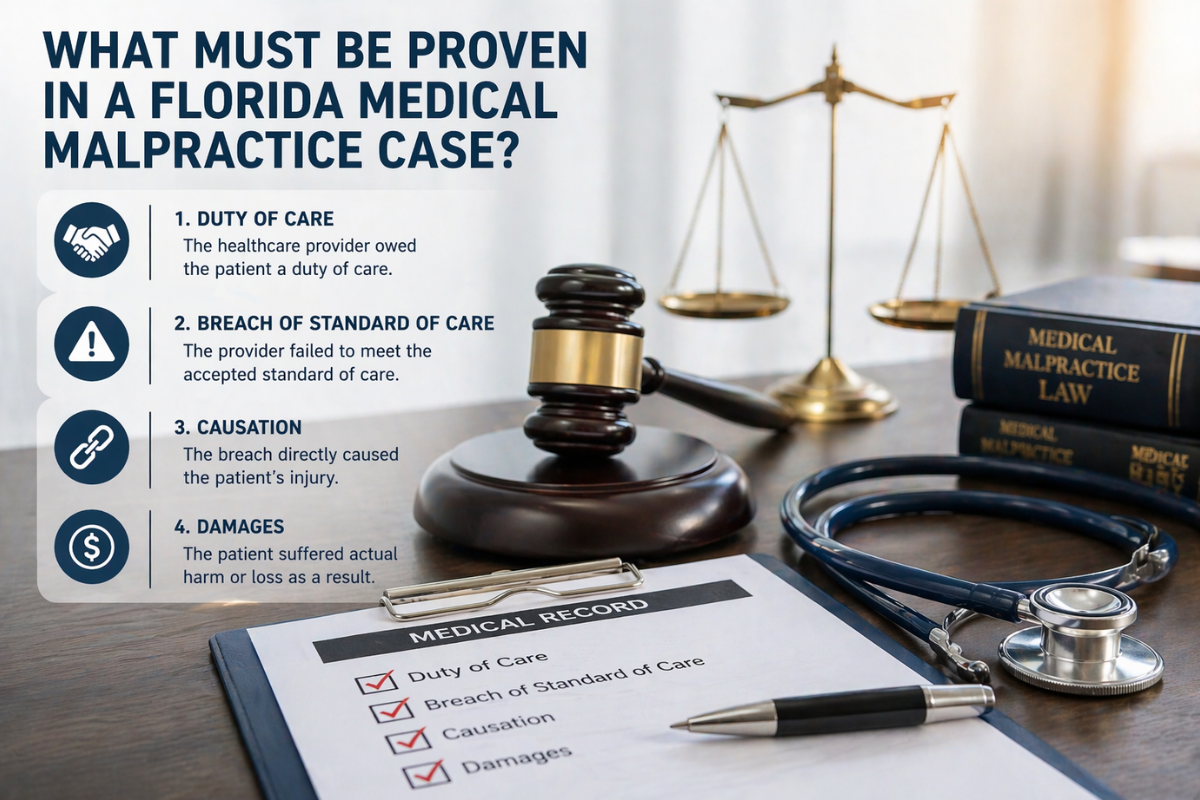
To succeed in a Florida medical malpractice lawsuit, the injured patient (plaintiff) must prove several legal elements. Each part of the case must be supported by evidence, not suspicion or assumptions.
1. Duty of Care
A duty of care usually exists when a provider-patient relationship has been established. Once a doctor, hospital, surgeon, nurse, or other licensed professional undertakes treatment, they are generally required to provide care consistent with accepted professional standards.
2. Breach of the Standard of Care
The plaintiff must show the provider failed to act as a reasonably careful provider would have acted under similar circumstances. In many medical malpractice cases, this issue is proven through expert testimony from a qualified physician or specialist.
3. Causation
It is not enough to show that a mistake occurred. The patient must also prove that the negligent act or omission caused actual harm. This is often one of the most contested issues in misdiagnosis claims and surgical negligence lawsuits.
For example, if cancer was diagnosed late but had already spread beyond treatable stages before the delay, the defense may argue the outcome would have been the same. On the other hand, if earlier diagnosis likely would have improved survival or treatment options, causation may be easier to establish.
4. Damages
The patient must prove measurable losses such as additional medical expenses, lost income, disability, pain and suffering, future treatment costs, or wrongful death damages.
Evidence Needed for Misdiagnosis Claims and Surgical Negligence
Strong medical malpractice cases are built on documentation, expert analysis, and a clear timeline. Because hospitals and insurers often defend these claims aggressively, evidence must be thorough and organized.
Medical Records
Medical records often form the backbone of a malpractice case. They may include:
- Emergency room records
- Primary care notes
- Specialist consultations
- Nursing notes
- Medication administration logs
- Consent forms
- Discharge instructions
- Follow-up recommendations
In misdiagnosis claims, records may reveal ignored symptoms, delayed referrals, or missing follow-up. In surgical negligence cases, records may show breakdowns in preparation, procedure performance, or post-operative care.
Imaging and Diagnostic Tests
CT scans, MRIs, X-rays, pathology reports, bloodwork, cardiac testing, and other diagnostics may reveal whether warning signs existed earlier than the defense claims.
Operative Reports
Surgical records may identify who participated in the procedure, what complications occurred, instrument counts, anesthesia notes, and whether corrective steps were taken.
Expert Testimony
Florida medical malpractice law often requires a qualified expert review. Experts may testify regarding:
- The accepted standard of care
- How the provider deviated from that standard
- Whether the deviation caused injury
- The patient’s future medical needs
Witness Statements
Family members, caregivers, nurses, technicians, or others may provide important observations about symptoms, communication failures, delays, or changes in condition.
Economic Loss Evidence
Pay records, tax returns, invoices, rehabilitation estimates, and life-care planning documents may help prove financial losses caused by malpractice.
Florida Pre-Suit Requirements Before Filing a Lawsuit
Florida imposes special procedures before many medical malpractice lawsuits can be formally filed. These pre-suit requirements are technical and missing them can damage or delay a claim.
Investigation of the Claim
The injured party and legal counsel typically conduct a detailed investigation, gather records, and evaluate whether negligence likely occurred.
Expert Corroboration
Florida law generally requires corroboration from a qualified medical expert stating there are reasonable grounds to believe malpractice occurred. This is one reason early case review is so important.
Notice of Intent
Before suit, a notice of intent to initiate litigation is commonly served on prospective defendants. This may trigger a pre-suit review period.
Presuit Response Period
During this stage, defendants may investigate, deny liability, offer a settlement, or request additional information. Strategic handling of this phase can significantly affect the case.
Because these deadlines and procedures can be complex, many families choose to contact Bodden and Bennett Law Group for a prompt case review.
Common Defenses Hospitals May Raise in Medical Malpractice Cases
Hospitals, physicians, and malpractice insurance carriers often defend these claims aggressively. Even when a patient suffered serious harm, defendants may argue that no legal liability exists. Understanding common defenses can help patients see why early investigation and strong evidence matter.
No Breach of the Standard of Care
A common defense is that the provider acted reasonably under the circumstances. Hospitals may argue that treatment decisions were medically appropriate, symptoms were unclear, or the complication occurred despite proper care.
No Causation
Defendants frequently argue that any alleged mistake did not actually cause the injury. In a misdiagnosis claim, they may contend the illness had already progressed too far to change the outcome. In surgical negligence cases, they may claim the complication was an unavoidable risk rather than negligence.
Preexisting Condition or Underlying Disease
Hospitals may assert that the patient’s prior health issues, chronic illness, or the natural progression of disease caused the damages instead of any negligent act or omission.
Patient Noncompliance
The defense may claim the patient failed to follow discharge instructions, skipped appointments, did not take medications, or delayed seeking follow-up care.
Comparative Fault
In some cases, defendants may argue that the patient’s own actions contributed to the injury. Whether that defense applies depends on the facts and Florida law.
Independent Contractor Defense
Hospitals sometimes argue that a physician was not their employee but an independent contractor, attempting to avoid hospital liability for the provider’s negligence. However, that defense is not always successful and depends on the relationship presented to the patient and the specific facts of the case.
Can Hospitals Be Liable for Doctor or Nurse Errors?
Yes, hospital liability may exist in multiple ways beyond the conduct of a single physician. Large medical facilities are responsible for systems, staffing, training, and the actions of many workers involved in patient care.
Employee Negligence
Hospitals may be legally responsible for negligent acts committed by employees acting within the scope of their jobs. This can include nurses, technicians, support staff, and sometimes employed physicians.
Apparent Agency
Even when a doctor is technically an independent contractor, liability may still be argued if the hospital represented that doctor as part of the hospital team and the patient reasonably relied on that representation.
Negligent Hiring or Credentialing
Hospitals may face claims for allowing an unqualified, unsafe, or impaired provider to treat patients when warning signs should have been discovered.
Unsafe Policies or Staffing Failures
Some malpractice claims involve understaffing, communication breakdowns, medication errors, poor supervision, lack of emergency protocols, or failures in charting systems.
Damages Available in Florida Medical Malpractice Cases
When negligence causes injury, Florida law may allow compensation for economic and non-economic losses. The value of a case depends on the severity of injury, long-term consequences, and available evidence.
Economic Damages
- Past medical bills
- Future treatment expenses
- Rehabilitation costs
- Lost wages
- Loss of future earning capacity
- Home health or assistive care costs
Non-Economic Damages
- Pain and suffering
- Mental anguish
- Loss of enjoyment of life
- Disability or disfigurement
- Loss of consortium in qualifying cases
Wrongful Death Damages
If malpractice results in death, surviving family members may have rights under Florida’s wrongful death law, depending on the circumstances and eligible survivors.
Florida Medical Malpractice Statute of Limitations
Deadlines are critical in every medical malpractice action. In many situations, Florida claims are subject to a two-year limitations period, but the exact calculation can depend on when the injury was discovered or reasonably should have been discovered, as well as other legal factors.
Because presuit requirements may consume valuable time, waiting can seriously damage a case. Important records may become harder to obtain, witnesses may become unavailable, and deadlines may expire.
Florida Medical Malpractice FAQ
How do I know if I have a medical malpractice case?
If a provider’s mistake may have caused serious injury, worsening illness, unexpected surgery, permanent disability, or death, a legal review may help determine whether negligence occurred.
Do I need expert testimony in Florida?
Often yes. Expert review and testimony are commonly required to establish the standard of care, breach, and causation.
Are misdiagnosis claims hard to win?
They can be challenging because patients must prove not only that the diagnosis was delayed or wrong, but that earlier and proper diagnosis likely would have changed the outcome.
Can I sue a hospital for a surgeon’s mistake?
Possibly. Liability may depend on employment status, apparent agency, credentialing issues, and whether hospital systems contributed to the harm.
Contact a Medical Malpractice Attorney in Florida – Bodden and Bennett Law Group
If you or a loved one suffered harm because of surgical negligence, delayed diagnosis, or another serious medical error, timely legal guidance can make a major difference. Medical malpractice cases require rapid evidence preservation, expert review, and compliance with Florida presuit rules.
Bodden and Bennett Law Group helps injured clients evaluate complex negligence claims and pursue accountability. To discuss your potential case, contact Bodden and Bennett Law Group for a confidential consultation today.