
E-Bike accidents in Palm Beach County are becoming a growing concern for families, especially after a recent crash in Wellington involving children that left multiple victims seriously injured. As electric bikes continue to rise in popularity across Palm Beach County neighborhoods, intersections, and school routes, parents need to understand both the safety risks and their legal rights if a child is injured in an e-bike accident in Florida.
Key Takeaways About E-Bike Accidents in Palm Beach County
- E-bike accidents involving children are increasing across Palm Beach County, particularly in high-traffic intersections.
- Recent incidents in Wellington highlight the severity of injuries, including trauma alerts and airlifted victims.
- Florida law treats e-bikes differently than traditional bicycles in certain liability scenarios.
- Parents may have legal options to pursue compensation after an e-bike accident in Florida.
- Understanding liability and immediate post-accident steps is critical to protecting your child’s rights.
Recent Wellington, FL E-Bike Accident Involving Children
A recent crash in Wellington, Florida, has brought renewed attention to the dangers of electric bicycles, especially for minors. According to local reports, two children were airlifted to a hospital after an e-bike pedestrian crash at the intersection of Greenview Shores Boulevard and Meadow Avenue.
Additional coverage confirms that the children were transported to a trauma center under pediatric trauma alert criteria, indicating potentially life-threatening injuries. Another report also details the severity of the situation and emergency response efforts involving Palm Beach County Fire Rescue.
This e-bike accident in Wellington, FL, is not an isolated event. Local officials and safety committees have already raised concerns about the increasing dangers of e-bikes in residential and school-heavy areas. A recent community discussion highlighted in Wellington safety meetings points to a growing trend of crashes involving minors, pedestrians, and high-speed electric bikes.
These incidents underscore a critical reality: e-bike accidents in Palm Beach County are no longer rare—and when children are involved, the consequences can be devastating.
Why E-Bike Accidents in Palm Beach County Are Increasing
The rise in e-bike accidents in Palm Beach County is closely tied to the explosive popularity of electric bicycles among teens and young riders. While e-bikes offer convenience and speed, they also introduce new risks—especially in suburban communities like Wellington, West Palm Beach, and surrounding areas.
Unlike traditional bicycles, many e-bikes can reach speeds of up to 20–28 miles per hour. This increased speed reduces reaction time and makes collisions—particularly at intersections and sidewalks—far more severe. When combined with inexperienced riders, distracted pedestrians, and vehicle traffic, the likelihood of an e-bike accident in Florida rises significantly.
Local government resources, including Palm Beach County’s e-bike safety guidance, emphasize that many riders are unaware of traffic laws or proper roadway behavior. This lack of awareness is especially dangerous for minors who may not fully understand right-of-way rules, helmet use, or safe riding practices.
Additionally, many of the most serious crashes occur in areas with:
- Busy intersections like Greenview Shores Boulevard
- Mixed-use sidewalks with pedestrians
- School zones and residential neighborhoods
- Limited bike lane infrastructure
As emergency responders and local officials have noted, emergency rooms across Florida are seeing a rise in traumatic injuries linked to e-bike crashes, including skull fractures, internal injuries, and orthopedic trauma in children.
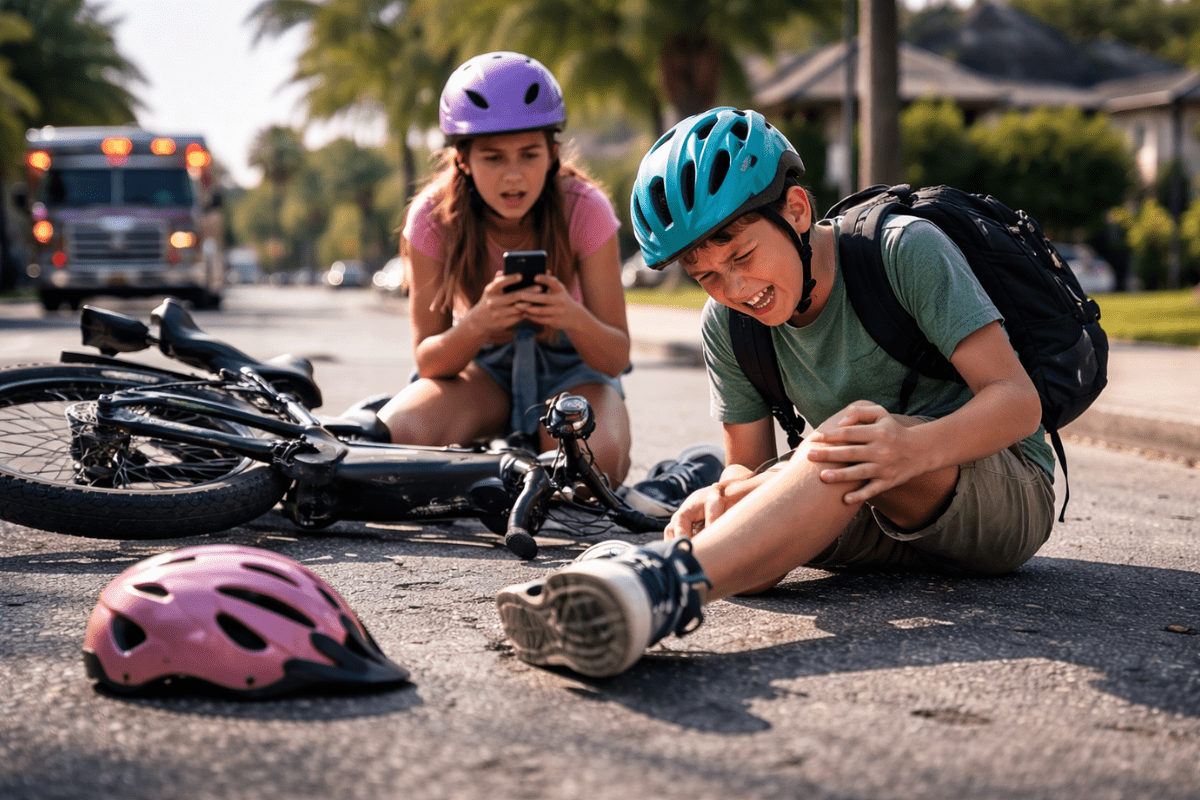
Common Causes of E-Bike Accidents Involving Children
Understanding what causes e-bike accidents involving minors is critical for prevention—and for determining liability when a crash occurs.
1. Intersection Accidents
Intersections are one of the most dangerous locations for an e-bike accident in Palm Beach County. Children may fail to yield, misjudge vehicle speeds, or enter crosswalks unexpectedly, leading to serious collisions.
2. High Speeds and Loss of Control
E-bikes can accelerate quickly, which can be difficult for younger riders to control. Loss of balance or overcorrection often results in crashes involving vehicles, pedestrians, or fixed objects.
3. Riding on Sidewalks
Many children ride e-bikes on sidewalks, where they share space with pedestrians. This increases the risk of a pedestrian e-bike accident in Florida, particularly in crowded areas or near parks and schools.
4. Lack of Supervision or Training
Unlike driving a car, operating an e-bike does not require a license in most cases. This means children may ride without proper safety training or parental supervision.
5. Distracted Riding
Just like drivers, e-bike riders can be distracted by phones, headphones, or friends. Even a momentary lapse in attention can lead to a serious crash.
6. Poor Visibility and Road Conditions
Low visibility at dusk, inadequate lighting, and poorly maintained roadways can all contribute to e-bike accidents. Children may be especially vulnerable because they are less likely to anticipate these hazards.
Each of these factors not only increases the risk of injury but also plays a major role in determining negligence and liability in a personal injury claim.
Florida E-Bike Laws for Minors
Understanding Florida e-bike laws for minors is essential for parents trying to protect their children—and their legal rights—after an e-bike accident in Florida. While electric bicycles are often treated similarly to traditional bicycles under Florida law, there are key distinctions that impact safety and liability.
How Florida Classifies E-Bikes
Under Florida law, e-bikes are divided into three classes based on speed and motor assistance:
- Class 1: Pedal-assist only, max speed 20 mph
- Class 2: Throttle-assisted, max speed 20 mph
- Class 3: Pedal-assist, max speed 28 mph
These classifications matter because higher-speed e-bikes—especially Class 3—can significantly increase the risk of severe injury in a crash.
Age Restrictions and Helmet Laws
Florida law requires that:
- Riders under 16 years old cannot operate a Class 3 e-bike
- Riders under 16 must wear a helmet
If a child injured in an e-bike accident in Florida was not wearing a helmet or was operating a restricted class of e-bike, it could impact liability and compensation.
Where E-Bikes Are Allowed
E-bikes are generally allowed on:
- Roadways and bike lanes
- Sidewalks (unless restricted by local ordinance)
However, riding on sidewalks often leads to pedestrian e-bike accidents in Florida, especially in densely populated areas like Palm Beach County.
Why These Laws Matter in Injury Cases
Violations of Florida e-bike laws for minors can be used as evidence of negligence in a personal injury claim. For example:
- A child riding a prohibited Class 3 e-bike
- Failure to wear a helmet
- Ignoring traffic signals or right-of-way rules
Even so, Florida follows a comparative fault system under Florida Statute §768.81, meaning a child may still recover compensation even if they were partially at fault.
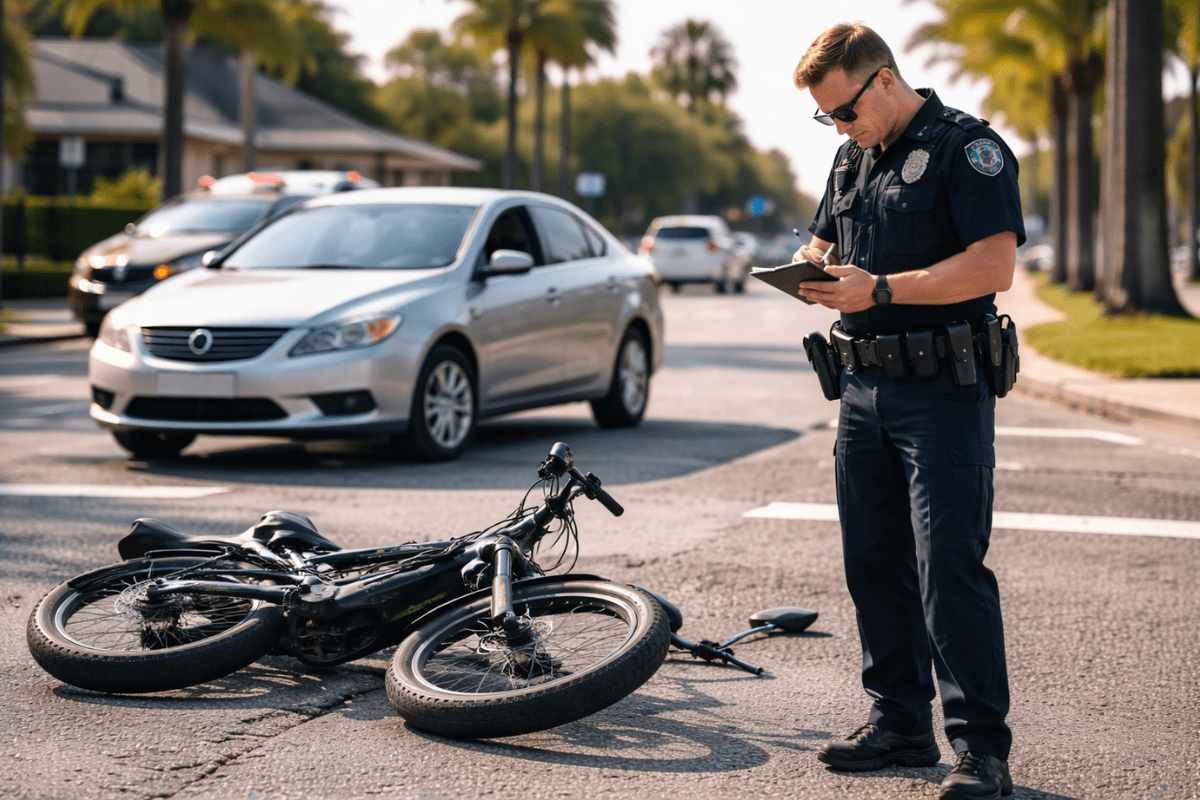
Who Is Liable in an E-Bike Accident Involving a Child in Florida?
One of the most important—and complex—questions parents ask is: who is liable in an e-bike accident involving a child? The answer depends on the specific circumstances of the crash, but multiple parties may be responsible.
1. The Driver of a Motor Vehicle
If a car, truck, or SUV struck a child riding an e-bike, the driver may be liable if they:
- Failed to yield at an intersection
- Were speeding or distracted
- Violated traffic laws
Motorists have a duty to watch for bicyclists, including children, especially in residential neighborhoods and school zones.
2. The E-Bike Rider (Comparative Fault)
In some cases, the child riding the e-bike may share partial responsibility. For example:
- Riding against traffic
- Ignoring stop signs
- Operating the e-bike recklessly
However, because minors are held to a different legal standard than adults, courts often consider their age, maturity, and ability to understand risk.
3. Parents or Guardians
In certain situations, parents may be held partially liable, particularly if they:
- Allowed unsafe riding behavior
- Provided an age-inappropriate e-bike
- Failed to supervise younger children
This is especially relevant in cases involving very young riders or high-powered e-bikes.
4. E-Bike Manufacturers or Retailers
If the accident was caused by a defective product—such as brake failure, battery malfunction, or design issues—the manufacturer or retailer may be liable under product liability laws.
5. Government Entities
In some e-bike accident cases in Palm Beach County, hazardous road conditions may contribute to a crash. This can include:
- Poorly designed intersections
- Lack of signage or signals
- Unsafe roadway conditions
Claims against government entities involve special procedures and shorter deadlines, making legal guidance critical.
Pedestrian E-Bike Accident Liability in Florida
When an e-bike collides with a pedestrian, determining liability becomes even more nuanced. These cases are increasingly common in Palm Beach County, especially on sidewalks and shared-use paths.
Who Is at Fault in a Pedestrian E-Bike Accident?
Liability depends on factors such as:
- Whether the rider was speeding or riding recklessly
- Whether the pedestrian was following traffic signals
- Where the accident occurred (sidewalk vs roadway)
In many pedestrian e-bike accident cases in Florida, the e-bike rider may be held liable for failing to yield or operating at unsafe speeds.
Injuries Are Often Severe
Pedestrian victims—especially children—are highly vulnerable to serious injuries, including:
- Head trauma and skull fractures
- Internal bleeding
- Orthopedic injuries
These injuries often require emergency transport, trauma center care, and long-term rehabilitation.
Insurance Complications
Unlike car accidents, e-bike crashes often involve complex insurance questions. Coverage may come from:
- Homeowner’s insurance policies
- Auto insurance (in some cases)
- Personal liability policies
Because of these complexities, determining liability and securing compensation after an e-bike accident in Florida often requires experienced legal guidance.
What to Do After an E-Bike Accident in Florida
If your child has been injured in an e-bike accident in Florida, the steps you take immediately after the crash can significantly impact both their health and your ability to pursue a personal injury claim. Here is a clear, parent-focused guide on what to do after an e-bike accident in Florida:
1. Seek Immediate Medical Attention
Your first priority should always be your child’s safety. Even if injuries appear minor, symptoms like head trauma or internal injuries may not be immediately visible. Many children involved in e-bike accidents in Palm Beach County are treated under trauma alert criteria due to the severity of these crashes.
2. Call Law Enforcement
Contact local authorities, such as the Palm Beach County Sheriff’s Office, to report the accident. An official police report will document key details and may serve as critical evidence in your case.
3. Gather Evidence at the Scene
If possible, collect:
- Photos of the scene, vehicles, and injuries
- Witness contact information
- Details about the e-bike and any involved vehicles
4. Avoid Admitting Fault
It is important not to admit fault at the scene, even if you believe your child may have contributed to the accident. Statements made early on can be used against you later. Understanding your rights is crucial, which is why many families review guidance like 10 reasons you should never admit fault after an auto accident in Florida.
5. Notify Insurance Companies Carefully
Insurance companies may contact you quickly after an accident. Be cautious when providing statements, as insurers often attempt to minimize payouts.
6. Consult an E-Bike Accident Attorney in Florida
E-bike accident cases—especially those involving children—can be legally complex. An experienced electric bike accident lawyer in Florida can help determine liability, preserve evidence, and pursue compensation on your behalf.
Can You Sue After an E-Bike Accident in Florida?
Yes, in many cases, you can sue after an e-bike accident in Florida, especially if negligence played a role in the crash. When a child is injured, parents or legal guardians typically bring the claim on their behalf.
Understanding Negligence
To pursue a personal injury claim, you must generally prove that another party acted negligently. This could include:
- A driver who failed to yield or was distracted
- An e-bike rider operating recklessly
- A property owner who failed to maintain safe conditions
Florida’s comparative fault rule (Florida Statute §768.81) allows injured parties to recover compensation even if they are partially at fault—though the total recovery may be reduced.
Statute of Limitations in Florida
In Florida, the statute of limitations for most personal injury claims is two years from the date of the accident. Failing to file within this window may result in losing your right to compensation.
Special Considerations for Child Injury Cases
Cases involving minors may involve additional legal considerations, including:
- Court approval for settlements
- Different timelines in certain circumstances
- Protection of the child’s financial interests
This makes it especially important to work with a knowledgeable e-bike accident attorney who understands Florida law.
Types of Compensation Available After an E-Bike Accident
Families affected by an ebike accident in Palm Beach County may be entitled to various forms of compensation depending on the severity of the injuries and the circumstances of the crash.
Economic Damages
- Medical expenses (emergency care, hospitalization, surgery)
- Rehabilitation and therapy costs
- Future medical needs
Non-Economic Damages
- Pain and suffering
- Emotional distress
- Loss of enjoyment of life
Child-Specific Damages
When a child is injured in an ebike accident in Florida, compensation may also include:
- Long-term developmental impacts
- Educational disruptions
- Permanent disability or disfigurement
In severe cases, such as those involving traumatic brain injuries or life-altering trauma, compensation can be substantial and may require structured settlements to protect the child’s future.
How an E-Bike Accident Attorney in Florida Can Help
Handling an e-bike accident in Palm Beach County—especially one involving a child—requires more than just filing paperwork. A skilled attorney can:
- Investigate the accident and determine liability
- Work with medical experts to document injuries
- Handle negotiations with insurance companies
- File a lawsuit if a fair settlement cannot be reached
Legal representation can make a significant difference in the outcome of your case, particularly when multiple parties or complex liability issues are involved.
Families dealing with serious injuries often benefit from exploring related legal services, such as those outlined in this auto accident attorney resource, which shares similarities with e-bike injury claims.
FAQ – E-Bike Accidents in Palm Beach County
Who is liable in an e-bike accident involving a child in Florida?
Liability depends on the circumstances of the accident. A driver, the e-bike rider, a parent, or even a manufacturer could be responsible. Florida’s comparative fault law allows multiple parties to share liability, and children are often treated differently under the law based on age and maturity.
What should I do after an ebike accident in Palm Beach County?
You should seek medical attention immediately, report the accident to law enforcement, document the scene, avoid admitting fault, and speak with an experienced e-bike accident attorney in Florida as soon as possible.
Can you sue after an ebike accident in Florida?
Yes. If negligence caused the accident, you may file a personal injury claim. When a child is involved, a parent or guardian typically files the claim on their behalf.
What compensation is available for a child injured in an e-bike accident in Florida?
Compensation may include medical expenses, rehabilitation costs, pain and suffering, and long-term impacts such as disability or educational disruption.
Are e-bikes legal for minors in Florida?
Yes, but there are restrictions. Riders under 16 cannot operate Class 3 e-bikes and must wear helmets. Violating these laws may impact liability in an accident.
How common are pedestrian ebike accidents in Florida?
They are becoming increasingly common, particularly in areas like Palm Beach County, where sidewalks and shared-use paths are heavily used. These accidents often result in serious injuries due to speed and a lack of protection.
Speak With an E-Bike Accident Lawyer in Palm Beach County
If your child has been injured in an e-bike accident in Palm Beach County, you don’t have to navigate the legal process alone. The aftermath of these accidents can be overwhelming—especially when dealing with trauma, medical care, and insurance companies.
The attorneys at Bodden and Bennett Law Group understand the complexities of e-bike accident Wellington, FL cases and are committed to helping families pursue the compensation they deserve.
Whether your case involves a pedestrian e-bike accident, an intersection crash, or questions about who is liable in an e-bike accident involving a child, experienced legal guidance can make all the difference.
Take the first step toward protecting your child’s future by contacting us to schedule a free consultation.